


Computing & ICT
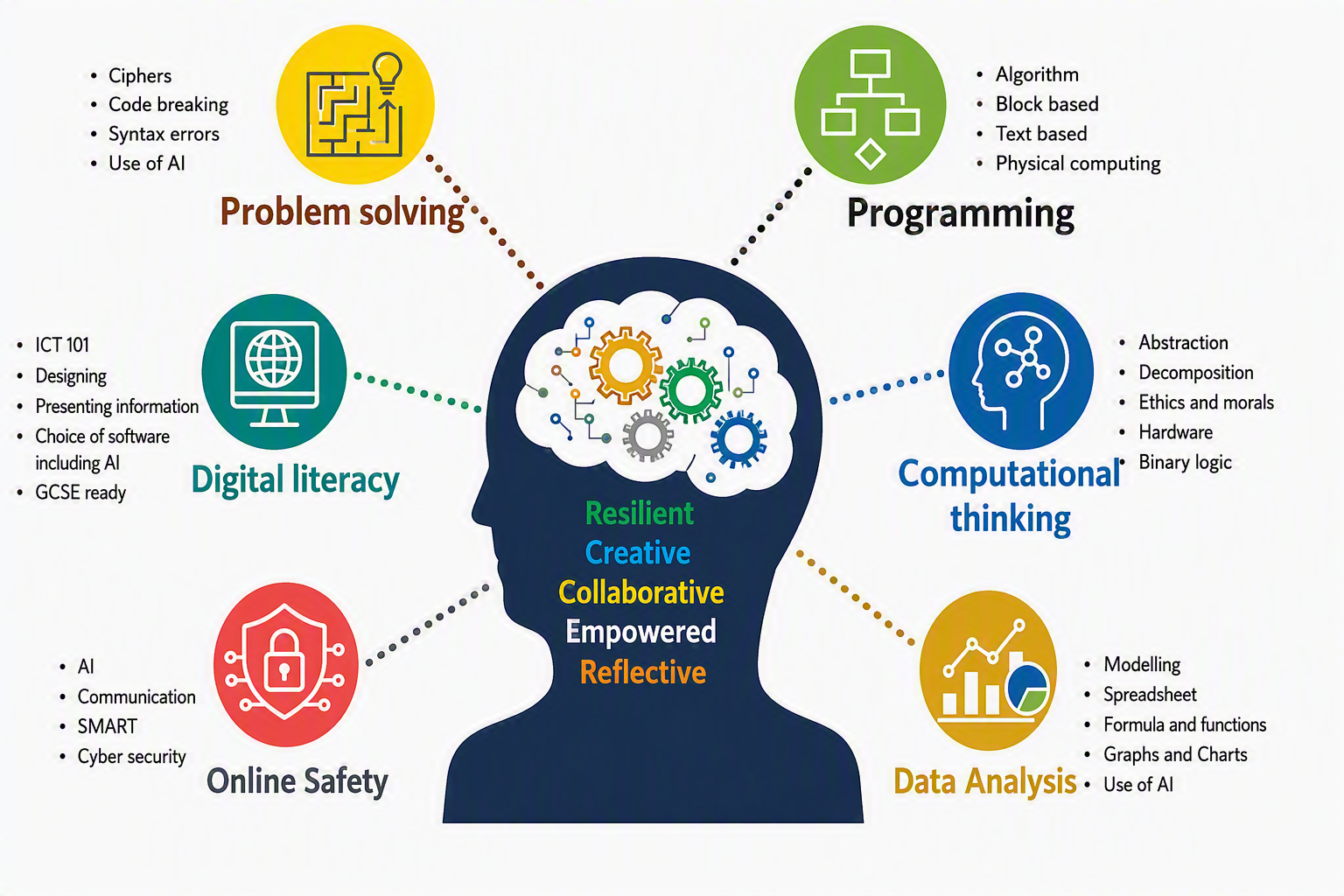
Computing and ICT Curriculum Intent
Think creatively
- We like it when students have new ideas and create imaginative solutions to problems. The Info Tech industry and the history of Computing is full of innovators and entrepreneurs. Sometimes, there will be a task brief that describes essential features of what you need to do. Ensure you meet these, but then put your own "spin" on the task, whether it be presentation skills, technical skills, team leading skills, or any other. Join the IT revolution.
Reason systematically
- Computer scientists solve problems. We do it by having a plan – being methodical. We carefully observe systems in action, noting what happens, and what does not produce the results we expect. Then we figure out why, and research and invent solutions. If a problem is too complex, we simplify it, and build solutions step by step. Don't be like "random guy": be systematic!
Work collaboratively
- If you want to go fast, go alone. If you want to go far, travel together! Working in teams, sharing ideas, using each other’s strengths to combine with our own are how we grow the most. Be humble; listen to advice; respect each other's ideas and see what you can learn from those around you. Don’t be afraid to share your ideas and even your failures. These are all things that lead to the “wisdom of teams”.
Explore safely
- What we make in the ICT world is valuable. We deal with large amounts of data, powerful tools and systems and important ideas. We need to make sure that these things are kept safe. Keep your work safe; keep the network environments safe; know what threats are out there, and how to keep yourself and others safe from harm.
Long term retention statement
The following strategies are built into our Computing and ICT Curriculum to enable progress through the subject and aim to allow pupil retainment of key information and skills:|
Strategy |
How to helps learners |
|
Engaging starter activities |
The use of starter activities allows pupils to ‘get into the zone’ with the content they are about to learn, with many of the activities tying in with previous learning or sets up the topic for that lesson. |
|
Homework |
In Computing and ICT homework is normally set via online forms or quizzes, with the content reflecting the learning that pupils have been taught in those weeks. |
|
Class notebook marking |
The majority of work completed within ICT is done on pupils’ class OneNote’s. Classwork will be reviewed multiple times throughout the term to gauge progress of pupils and highlight any areas of learning that may need further coverage |
|
Peer marking and feedback |
The use of peer marking is a great tool to allow pupils to reflect on their own progress, but also celebrate the excellent work of others. Learning to follow a mark scheme and apply to a piece of work is a great skill to possess |
|
End of unit assessments |
Each termly topic will have an end of unit assessment that will be formally marked and graded, this mark will be the best indication of how well a pupil has understood that particular area of the course. Each assessment will allow pupils to reflect on their progress via DIRT. |
|
Independent and guided learning |
We believe that being an independent learning is a great skill to possess, so will often encourage pupils to explore how to solve a particular problem. This could be through speaking to peers, researching on the Internet, or following teacher supplied resources such as video tutorials or guides. |