


History and Politics
Statement of Intent
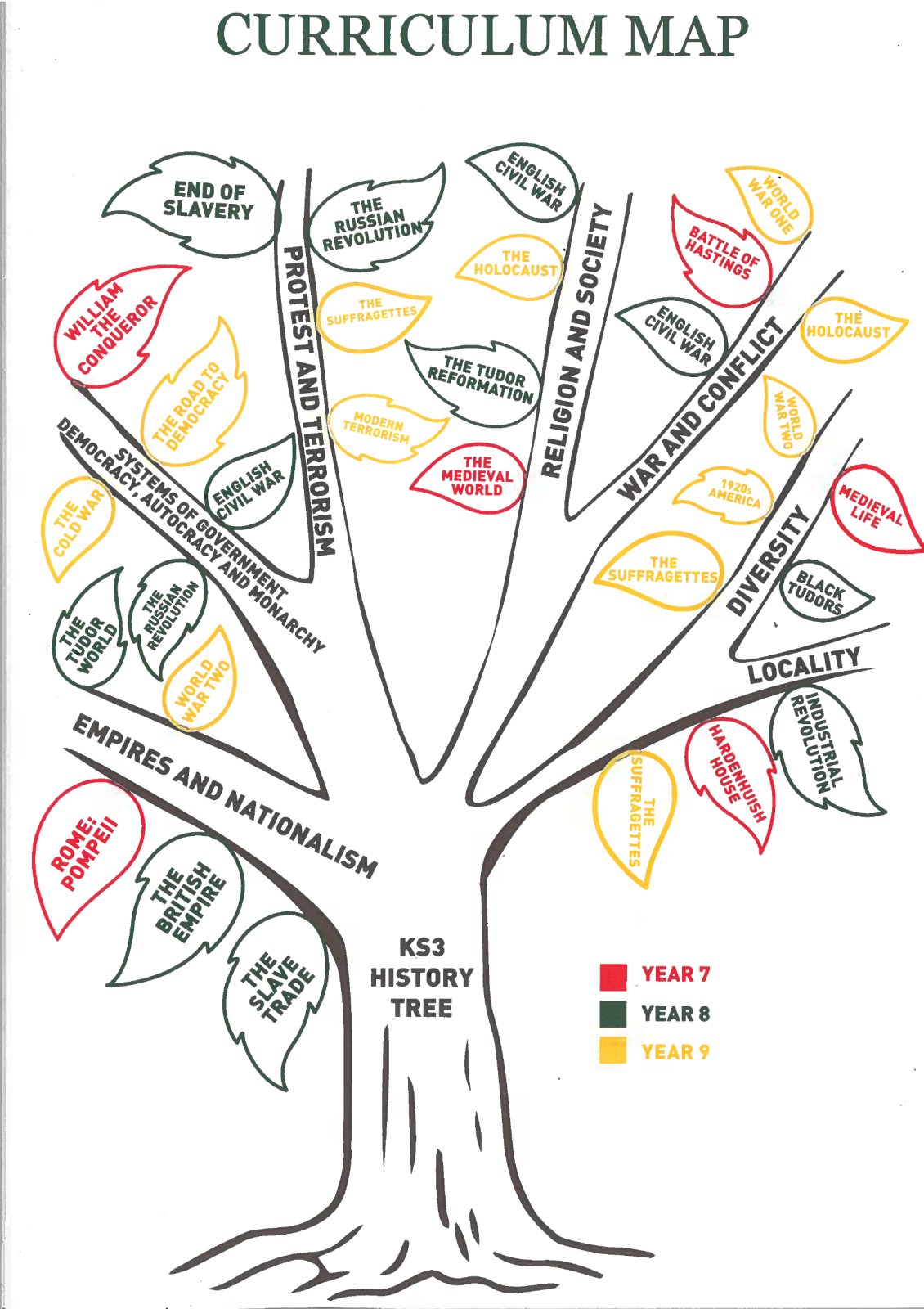
The History Curriculum empowers our pupils to challenge the world around them, to shape their growing opinions based on their engagement with evidence and interpretations from the past. It will allow them to build a deeper understanding of the present world they live in and question how and why decisions are made. The heart of the history programme is historical enquiry, which engages our learners with a wide range of visual and written interpretations that will help them understand the cultural diversity of the past and aid them in reaching their own substantiated judgements. Through these enquiries, we aim to develop the curiosity of our learners to help them to understand their place in the world and how history has influenced decisions about choices, attitudes, and values. The visual image of a tree for our curriculum map represents how the tree has been central to history, from the forests that covered the Earth at the beginning of time to the way they were removed during the Industrial Revolution and the scars of which remain on the battlefields of the First and Second World Wars.
Long term retention statement Key Stage 3
History employs a variety of strategies that assist with long term retention of knowledge and concepts. These include:
- We have planned an effective sequence of lessons, which incorporates similar concepts across Key Stage 3. These include themes such as empire, democracy and conflict. We will return to these themes across our different lesson topics
- You will be given a series of assessments throughout Years 7, 8 and 9 which reflect the key skills which are assessed in history, including: knowledge, interpretations, sources, significance, causation and change and continuity
- Your homework has been created to help support wider extension and consolidation of learning from the lessons. This will help you to a) remember what we have looked at b) build upon it with new examples and c) to provide you with resources to carry out your own research
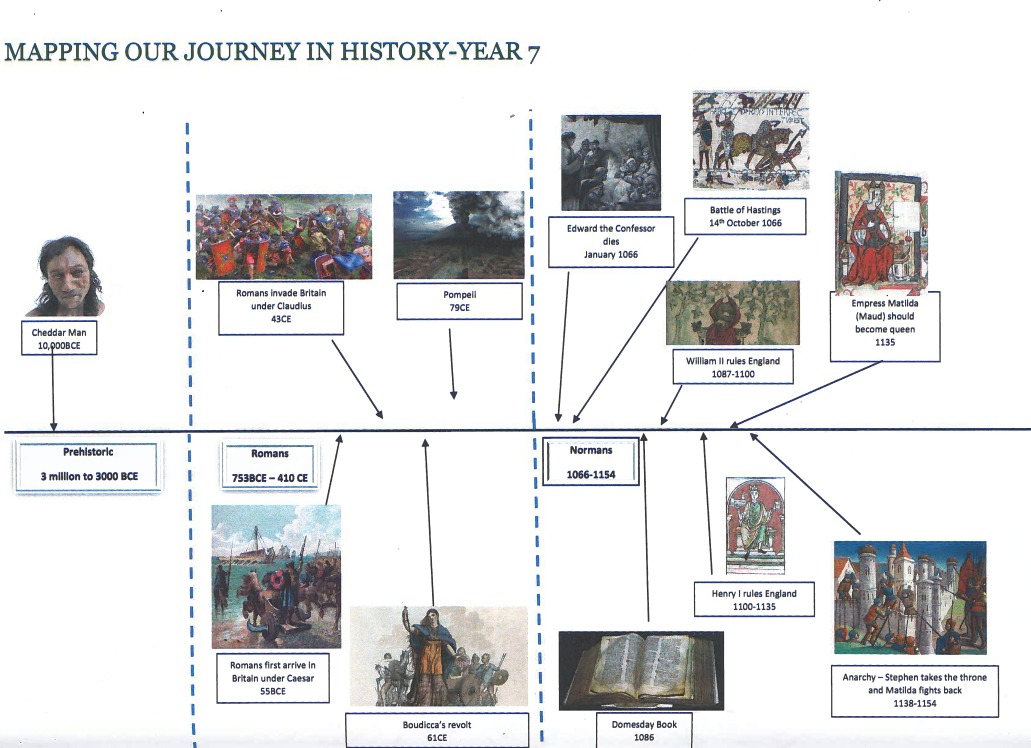
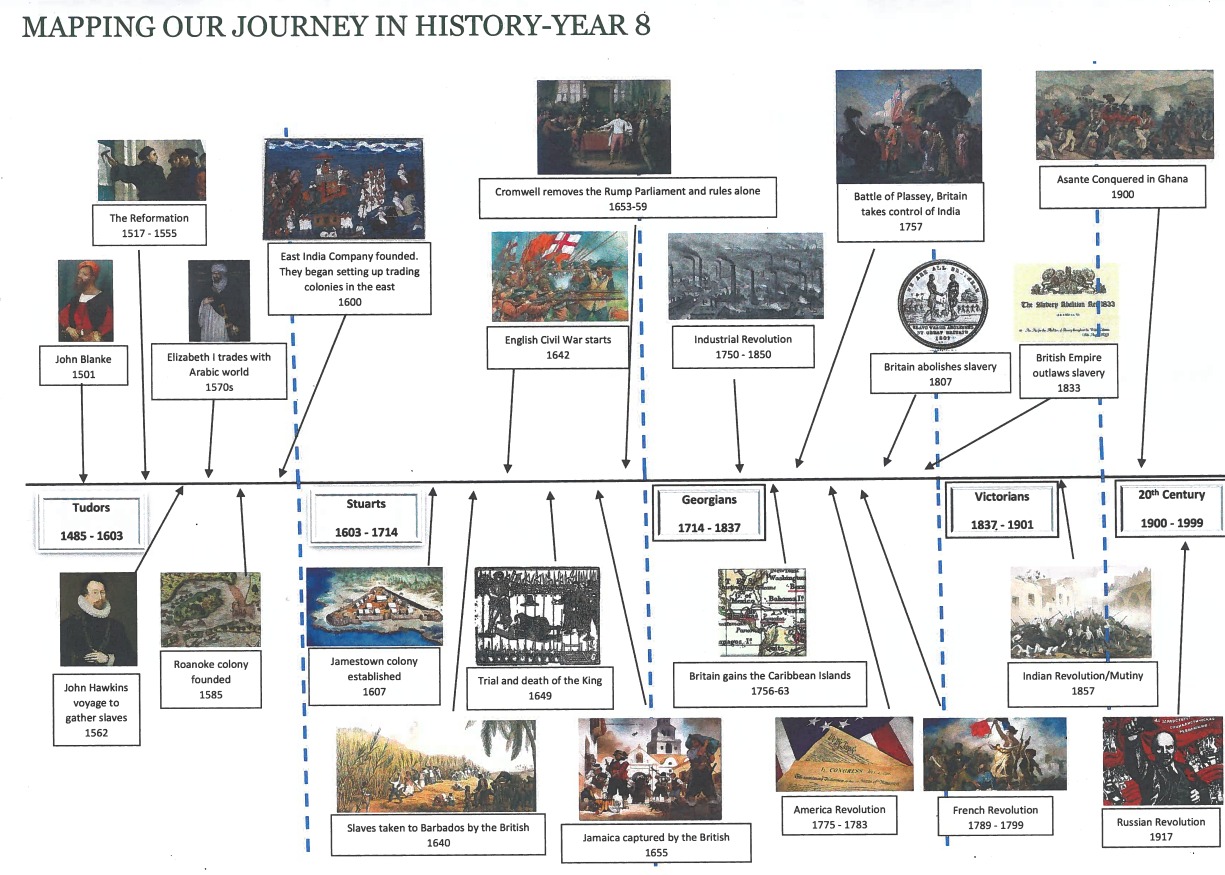
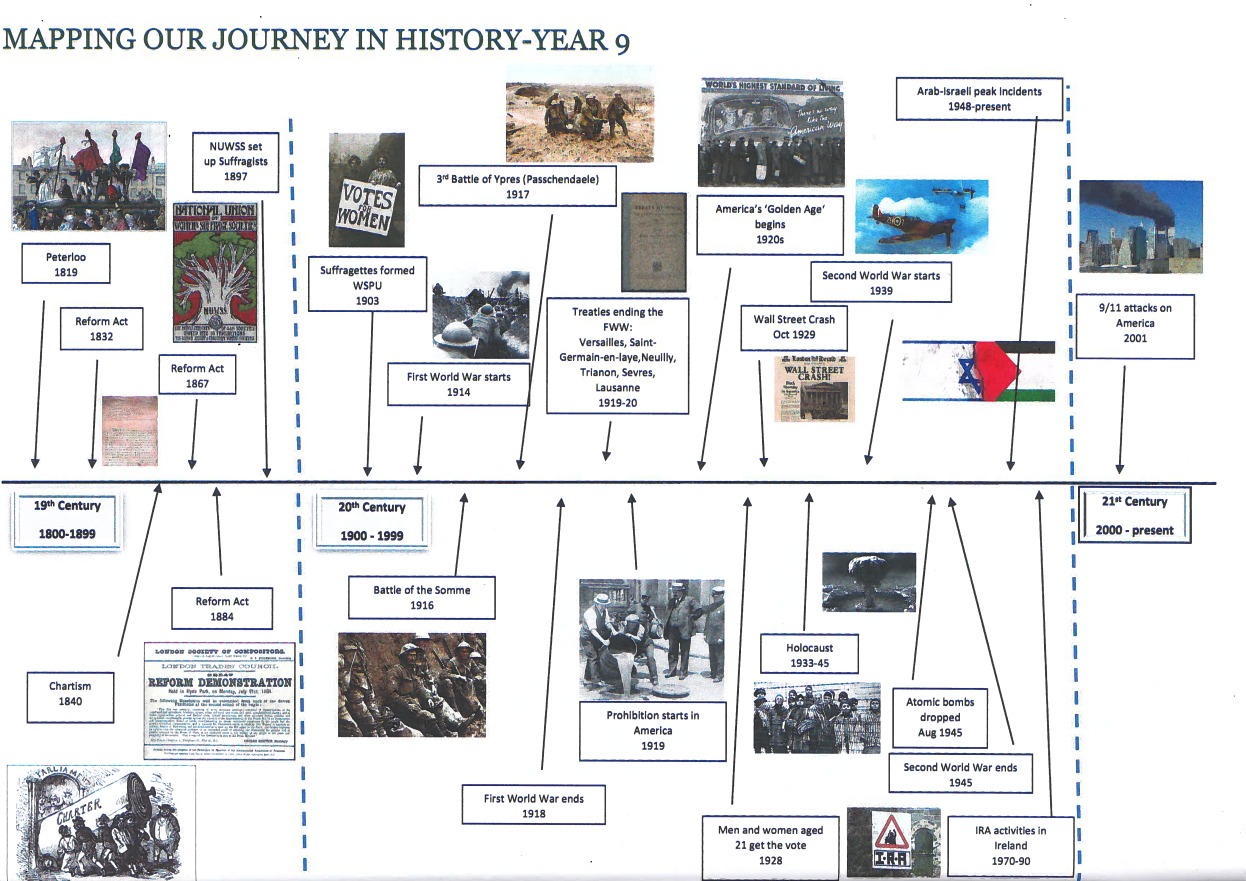
- Learning will be checked at the end of a sequence of lessons and reviewed by an overarching lesson, bringing together multiple lessons and ideas, such as a timeline task mapping the change of particular themes
- Relating your knowledge to events will be provided through our extra-reading challenges, which are open to all pupils, and will allow them to supplement their class-based knowledge beyond the lesson topics
Long term retention statement Key Stage 4
At Key Stage 4, History employs a variety of strategies that assist with long term retention of knowledge and exam-based skills, along with historical concepts. These include:
- Using regular knowledge quizzes as homework to help recall key features, dates and events of the topics studied
- Checking your ability to successfully deploy knowledge and exam-based skills through regular termly assessments, which will be consolidated into an assessment booklet, which can used to showcase model answers to assist with revision at a later stage
- We have planned the GCSE History curriculum to have a mostly chronological approach, which allows concepts to be developed over time. For example, we begin with the earliest topic, the Anglo Saxons and move onto Medicine through time. This allows us to learn how one society developed into another, before we look at how one theme developed over time. In Year 11 we investigate British America, where democracy challenged dictatorships, before studying Nazi Germany, where a democracy chose to follow a dictatorship
- A revision guide containing activities to promote retention of learning is ready for you to use alongside your studies, as well as a series of ‘how to videos’, which will assist you in linking your knowledge to the skills needed for the exams
- Relating your knowledge to events will be provided for via our extra-reading tasks, which are open to all pupils and will allow them to read articles relating to the topics studied and give them a better understanding of the course and its application beyond the syllabus