


English
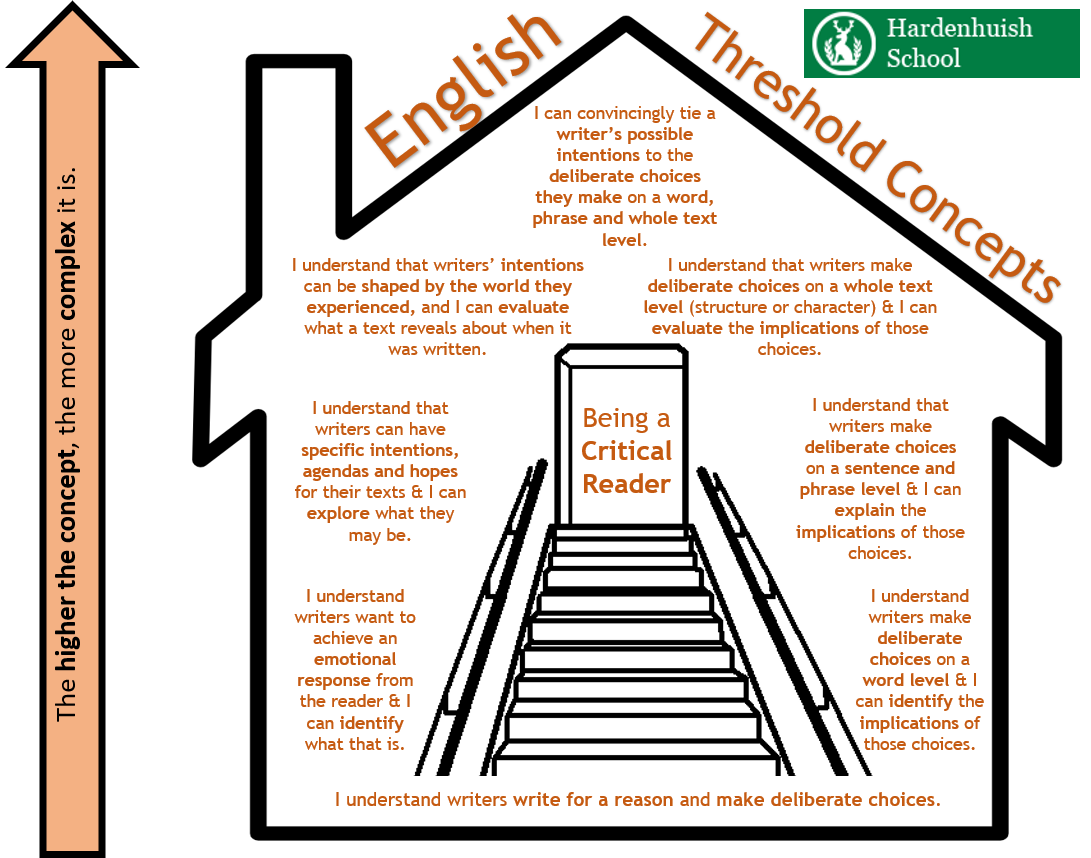
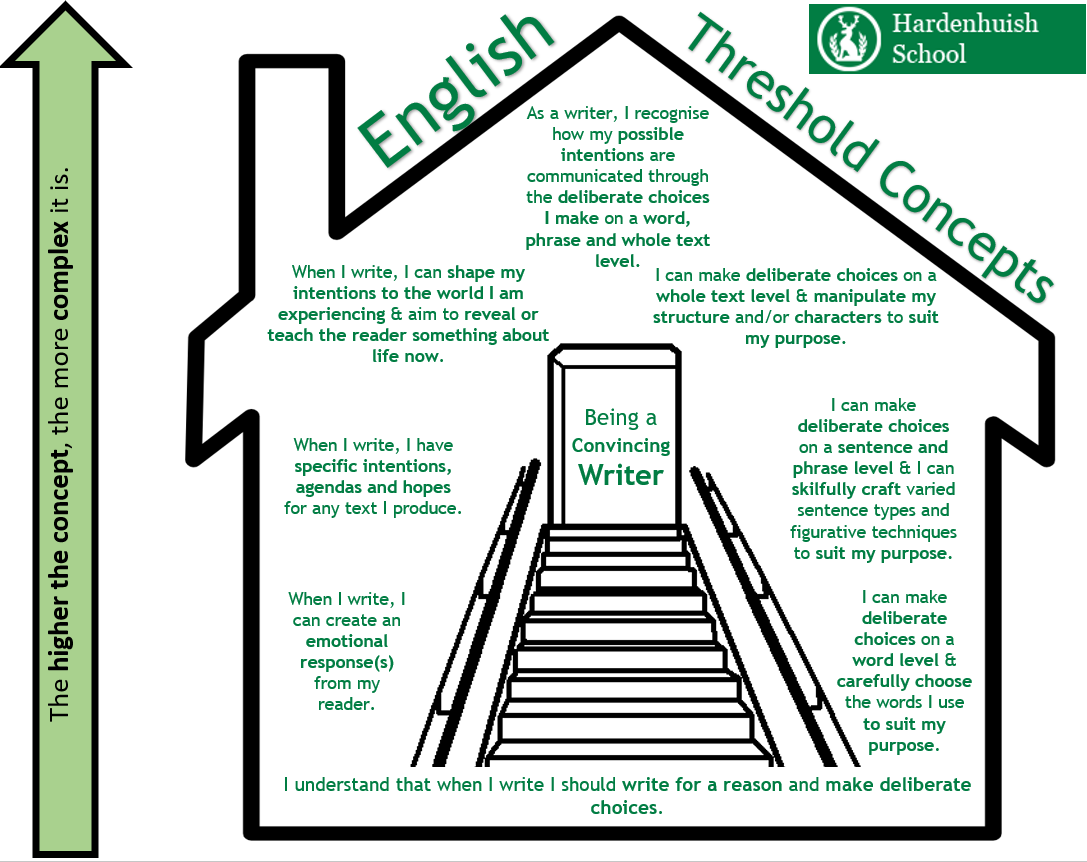
English Curriculum Intent Statement
English is a subject that should empower our students to articulate their views on our world and their own place within it. This empowerment stems from students encountering the best of what has been thought and written, debating and shaping their views through the ‘great conversation’ of the country’s shared literary heritage and through highlighting opportunities for further study, as well as our unwavering commitment to our students reading widely and diversely. From this love of literature comes the invitation to participation – we aim to support students in crafting their own writing and in securing the fundamentals of communication, allowing them to claim their place in our world through the power of the written word.
English Long-Term Retention Statement
Our curriculum comprises of five key subject knowledge strands. These strands (and the knowledge and skills they encompass) are introduced in Year 7 and subsequently built upon throughout Key Stage Three and Four. In our Schemes of Work, we make explicit references to the content and skills students have already acquired in each knowledge strand, ensuring that long-term retention is promoted through the frequent revisiting and practising of key concepts and skills.
As they move into Key Stage Four, we equip students with more specific strategies to help them to revise and develop their long-term retention. We promote a three-pronged approach to revision: revision of knowledge, practise of skills and the reviewing of feedback. This premise underpins all of our revision activities, resources and any homework tasks students are set. At a curriculum design level, we recognise that the Poetry Anthology is an area where GCSE students struggle to retain long-term memory and, as such, we have interleaved our teaching of poetry alongside the rest of the curriculum.
Key Stage 3
- KS3 English Learning Pathway
- KS3 Reading Progress Map
- Year 7 Unit 1 - Supporting Document for Short Stories
- Year 8 Unit 2 - Supporting Document for The Woman in Black
- Year 8 Unit 3 - Supporting Materials
- Year 8 Unit 4 - Supporting Documents
- Year 9 Unit 1 5 - Supporting Document for Animal Farm
- Year 9 Unit 1 5 - Supporting Document for Small Island
- Year 9 Unit 2 - Supporting Document Protest Poetry Anthology
- Year 9 Unit 3- Supporting Document for Romeo and Juliet
Key Stage 4
- KS4 English Learning Pathway
- KS5 English Language Learning Pathway
- KS5 English Literature Learning Pathway
- KS5 Film Studies Learning Pathway
- Year 10 Unit 1 - Ongoing Support Document for Poetry Anthology
- Year 10 Unit 1 - Supporting Documents for The Art of Fiction
- Year 10 Unit 2 - An Inspector Calls Supporting Documents
- Year 10 Unit 2 - Lord of the Flies Supporting Documents
- Year 10 Unit 3 - Supporting Documents
- Year 10 Unit 4 - Supporting Document for Unseen Poetry
- Year 10 Unit 5 - Supporting Document for Language Paper 2
- Year 11 Unit 2 - A Christmas Carol Supporting Document
- Year 11 Unit 2 - Jekyll and Hyde Supporting Documents
- Year 11 Unit One - Supporting Document for Macbeth